In the modern world of rough dynamics in the digital environment, the emergence of artificial intelligence (AI) is changing many industries, and mobile applications are leading the change. Smart mobile applications, which are enabled by the use of AI, are not a matter of the future anymore but a reality of the present, and they provide users with efficient, personalized, and intuitive experiences. This paper will discuss the concept of AI and the future of mobile apps which are set to be smarter, more responsive, and more important in our lives.
Understanding Intelligent Applications
Intelligent applications represent a significant leap forward from traditional mobile apps. They leverage artificial intelligence and machine learning to provide enhanced functionality and personalized experiences. These applications are designed to learn from user interactions, adapt to individual preferences, and make proactive decisions, ultimately creating a more seamless and efficient user experience. The integration of AI transforms standard apps into dynamic, responsive tools that anticipate user needs.
What is an Intelligent App?
Intelligent app can be described as one that can learn, adapt, and become even more efficient with time using the power of artificial intelligence. Customized recommendations, predictive analytics, and automatic tasks are featured in these apps, and they are generated based on AI algorithms. Intelligent apps can examine large volumes of data to discover patterns, make quality decisions, and give users the right information at the right time as opposed to traditional apps which insist on programming rules to be applied. The functionalities of these applications make them different amongst the mobile technology world.
Intelligent Applications Characteristics
The intelligent applications have several advanced capabilities as key features.
- NLP to facilitate smooth communication.
- Personalized recommendation machine learning models.
- Anticipatory analytics of predicting user needs.
These intelligent applications may be interoperable with other services and devices to form an ecosystem, which improves the user experience. Moreover, intelligent apps use data analytics to constantly advance their functioning and conform to the changing user patterns, which makes them essential instruments in different applications.
Implementation of AI and Big Data
AI and big data are important in developing intelligent applications. It takes massive amounts of data to train AI algorithms, and provide accurate predictions. It is big data that supplies the base upon which these algorithms are built to identify patterns, trends and anomalies that humans could not fail to notice. This synergy enables the intelligent applications to provide highly personalized, relevant experience to users, which makes them more efficient and effective in meeting the needs of the users. The uses of artificial intelligence in this regard are immense and they are swelling with new technologies.
The Mobile Technology and the Role of AI
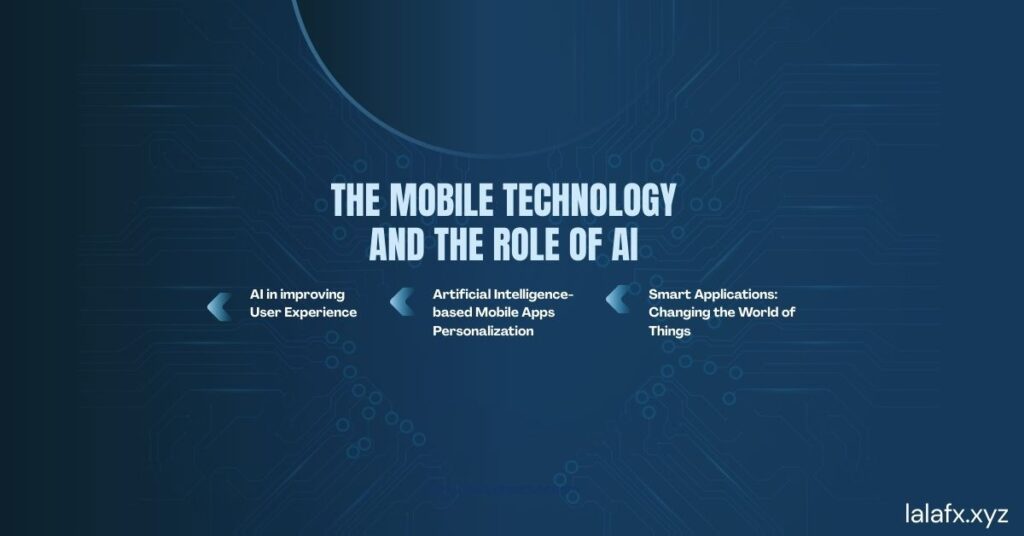
AI in improving User Experience.
The next phase in improving user experience with AI would be to use artificial intelligence to develop more user-friendlier and more customized interactions in a mobile application. The AI algorithms have the ability to analyze the users behavior to anticipate their needs and display the relevant information, making apps an engaging experience. With the culmination of AI and machine learning (AI and ML), developers could develop intelligent applications that will respond to their preferences, and at the end, this will enhance the satisfaction and usage of mobile technology by users.
Artificial Intelligence-based Mobile Apps Personalization.
The personalization of mobile applications is an AI-based technology that transforms the mobile technology-user interaction. Machine learning will make the intelligent application analyze the big data and comprehend user preference and behaviors. This allows apps to be able to provide personalized suggestions, custom content, and predictive support. The artificial intelligence usage will provide individual users with a unique and highly relevant application environment, which triggers user satisfaction and loyalty.
Smart Applications: Changing the World of Things.
Daily tasks are changing with the introduction of smart applications that combine the use of artificial intelligence in their daily routine. These smart applications can apply AI functioning to automate the user tasks, deliver information in a timely manner, and use the information to make a decision about the user. Smart applications use AI algorithms to simplify the process of scheduling the appointment and managing the finances so that they can increase the productivity. This change demonstrates the potential of AI technologies to make numerous things in everyday life easier and better with the help of mobile technology.
Artificial Intelligence Usage in Different industries.
Artificial Intelligence in Business: Changing the Process.
AI in business is revolutionizing the activities in different sectors and the uses of artificial intelligence are making operations easier and better in decision-making. The big data can be examined using AI algorithms to determine the trends, predict the changes, and allocate resources in an optimal way. Machine learning applications can consider do regular jobs automatically and leave human workers to other types of more serious work. This application of artificial intelligence will make it efficient and cost-effective, as well as increase the overall performance of the business.
Artificial Intelligence in Healthcare: How To enhance patient outcomes.
AI in healthcare is significantly improving patient outcomes through intelligent applications that provide more accurate diagnoses, personalized treatment plans, and efficient healthcare management. AI algorithms can analyze medical images, patient data, and research findings to assist doctors in making informed decisions. Machine learning models can predict patient risks, optimize medication dosages, and enhance the overall quality of care. The use of artificial intelligence is revolutionizing healthcare, leading to better patient outcomes and a more efficient healthcare system. The integration of AI also allows the analysis of large datasets, facilitating research and the development of new technologies.
Applications of Intelligent Apps in Education
The applications of cleverly apps offer transformative potential in instruction by personalizing the learning encounter and upgrading understudy results. AI-powered mentoring frameworks can adjust to person learning styles, giving customized instruction and input. Machine learning calculations can analyze understudy execution information to distinguish regions of quality and shortcoming, permitting teachers to tailor their instructing strategies in like manner. This utilize of manufactured insights cultivates a more locks in and viable learning environment, planning understudies for victory in the computerized age. As innovation proceeds to development, the integration of AI will encourage revolutionize instruction, making learning innovations more available and personalized.
Emerging Innovations and Patterns Forming the Future
Impact of Web of Things (IoT) on Versatile Apps
The affect of the Web of Things (IoT) on versatile app improvement is significant, with shrewdly applications progressively joining with IoT gadgets to offer consistent encounters. AI calculations analyze information from IoT sensors to give real-time bits of knowledge and robotized activities, improving the usefulness of savvy applications. The integration of AI with IoT makes openings for modern advances in different segments, from shrewd homes to mechanical robotization. As versatile innovation progresses, the cooperative energy between IoT and AI will drive encourage advancement and make more instinctive client encounters.
Future Patterns in Portable Technology
Future patterns in versatile innovation point towards more noteworthy utilize of manufactured insights, with AI-powered highlights getting to be progressively predominant in versatile app advancement. Developing innovations like generative AI and blockchain innovation are balanced to revolutionize how apps offer personalized encounters and secure information exchanges. The integration of AI will lead to more advanced brilliantly apps that can expect client needs and mechanize complex errands. As innovation proceeds to advance, the joining of AI and portable innovation will open unused advances and openings over different businesses.
Challenges and Opportunities Ahead
The challenges and opportunities ahead in the realm of AI-driven mobile app development are significant. While the use of artificial intelligence promises enhanced functionality and personalized experiences, developers must address concerns related to data privacy, security, and ethical considerations. Overcoming these hurdles will pave the way for wider adoption of intelligent applications and unlock the full potential of AI in mobile technology.
The Future of Intelligent Mobile Apps
How Businesses Can Leverage AI and Mobile Technology
Businesses can leverage AI and mobile technology by integrating smart applications into their operations, enhancing customer engagement and streamlining internal processes. AI algorithms can analyze customer data to personalize marketing campaigns and improve customer service. Machine learning models can predict market trends and optimize supply chain management.
Learning to look into the Future with Intelligent Apps.
The future of intelligent apps demands business and individuals to adopt emerging technologies and develop a culture of life-long learning. With the current changes in the mobile technology, it will be necessary to adapt to the new environment and adopt any emerging new technology to be successful.
FAQ Section
What are smart mobile applications?
Smart mobile applications are smart applications which combine AI and machine learning to improve the user experience. These intelligent applications provide personalized content and automate actions and use AI algorithms to learn based on human interaction.
What are the benefits of AI with mobile applications?
AI is used to improve mobile apps to add such features as personalized suggestions, predictive analytics and natural language processing.
Which industries will gain the most on the use of intelligent applications?
Intelligent applications are useful in a number of industries.
- Enhance treatment and diagnostics in healthcare.
- Prevent financial fraud and tailor financial advice in finance.
What will Intelligent Applications do to your business?
Intelligent applications have the potential to transform your business because they can automatize the processes, improve interaction with customers, and offer evidence-based insights.
What are the most important features of smart applications?
Some of the major features of intelligent apps include:
- Learning to learn through data.
- Flexibility to user requirements.
- Automation of tasks.