In today’s fast-paced world, stress and anxiety have become increasingly prevalent. Many individuals are seeking effective ways to manage these challenges and cultivate a greater sense of calm and overall well-being. This article delves into the world of mindfulness, exploring various mindfulness techniques and resources to help you integrate mindfulness into your daily life.
Understanding Mindfulness
What is Mindfulness?
Mindfulness is the fundamental human capacity to be in full attention of our whereabouts and what we are doing and not be too responsive or distraught by what is happening around us. It is the ability to listen without judging what is going on in the present. The most widespread mindfulness exercise is Mindfulness meditation, which teaches you to watch your thoughts and feelings come, and not become attached to them. Through mindfulness, you get to know how to handle experience with curiosity and acceptance.
Significance of Mindfulness
Mindfulness is significant in the sense that it helps in providing greater connection of the mind body. Mindfulness can help us be mindful of this distracted world and concentrate on the present moment rather than waste our time ruminated upon what has and will happen. An ordinary mindfulness can lead to a higher emotional handling, self-concept, not to mention sympathy. Having a mindful attitude, people will be capable of coping with the difficulties in their lives in a more resilient and less stressful manner.
Research studies have determined several benefits of mindfulness in people practicing it. Certain research studies prove that mindfulness practices exhibit the following outcomes:
- The practice allows individuals to decrease their level of stress and anxiety.
- The approach allows the enhancement of listening capabilities that result in the enhancement of concentration skills.
- The process is useful in enabling people to achieve improved health outcomes.
The inner peace depends on the mindfulness meditation and other techniques that enable people to retain their composure at hard times. Mindfulness practice is the one that teaches an individual to embrace self compassion as the person learns to be understanding and compassionate with oneself and their fellow human beings.
Mindfulness Techniques of Meditation
Introduction to Mindfulness Meditation
Mindfulness meditation is an element of mindfulness, providing a formal means of developing mindfulness of the present moment. This is a type of meditation that will entail sitting in a comfortable position. This is an exercise that will assist in alleviating stress and may be very useful over time, resulting into having a greater feeling of relaxedness and calmness of mind. The advantages of mindfulness can be realized by means of the regular mindfulness practice.
The Simple Breathing Practices to Help-Reduce Stress
Breathing exercises determine one of the easiest yet efficient ways of de-stressing and overcoming anxiety with mindfulness techniques. One of the common methods of breathing is that one should inhale deeply using his/her nose with the help of the mouth and hold the breath for a few seconds and then exhale it gradually out of the mouth. Pay attention to how the air enters and exits out of your body when you are breathing. It is an effective mindfulness practice that can be applied to get rid of the stress in a moment. Conscious breathing is the relationship between mind and body.
Mindfulness Meditations in Practice
Body Scan Technique
Body scan is a technique under mindfulness that is based on the act of systematically making awareness of various parts of your body. This training works to improve body awareness and along with it to detect tension and release it. Frequent mindfulness sessions in form of body scans enhance physical experience and help in relaxation.
Mindful Breathing Practices
Mindful breathing involves practicing breathing exercises that enable you to fully engage your body, mind, and emotions (Garvey, 2015). Mindful breathing is not the simplistic exercises that require one to have a deeper focus and concentration on every breath. It is an efficient meditation. During the day, it is possible to build the mindfulness with the assistance of the regular meditation and mindful breathing training as well and feel more relaxed. Meditation would improve with mindfulness apps.
Meditative Eating: A Step Guide
Mindful eating is a practice in mindfulness that is based on being aware of the process of eating using your senses. Before you start eating, pause and look at the food that you are going to eat and notice its colours, feel its texture and smell. When you are taking food, explore every bite and note the taste and the texture of the food. Take everything very slowly and methodically and do not get distracted by phones or television. When you have time to eat, then you can focus on the meal and better digest what you have eaten; you might find yourself enjoying the food more. By mindful eating, you would know how to be mindful and feed mind and body.
Developing Mindfulness in Everyday Life
The Process of Making Mindfulness Your Daily Practice
You can put it in practice by setting up daily mindfulness practices using straight forward steps that only involve you taking action. Begin by spending some minutes in a day practicing mindfulness through meditation. You would be able to do this in the morning, during lunch or before going to bed. After you have gone through your actual meditation sessions, you should find opportunities to be mindful during your day-to-day life. Individuals are supposed to monitor their activities in cleaning their teeth and washing their dishes and walking to their workstations. Daily mindfulness will ensure that you will not only save your health but also reduce your levels of stress.
Most Mindfulness Meditations to Practice
You can apply these mindfulness meditation techniques toward becoming more focused and reducing your stress levels. These are:
- Mindful breathing exercises and this involves attending to what body of air you are breathing in and out.
- The body scan where you create awareness of various areas of your bodies and you observe any sensation without any judgment.
- Mindful walking: This is a practice where one focuses on the physical experience of walking, e.g. the sensation of your feet touching the floor.
There are various mindfulness techniques that you are supposed to practice until you find the right one that meets your needs.
Overcoming Stress and Anxiety with the help of Mindfulness
The Practice of Mindfulness and Stress Management
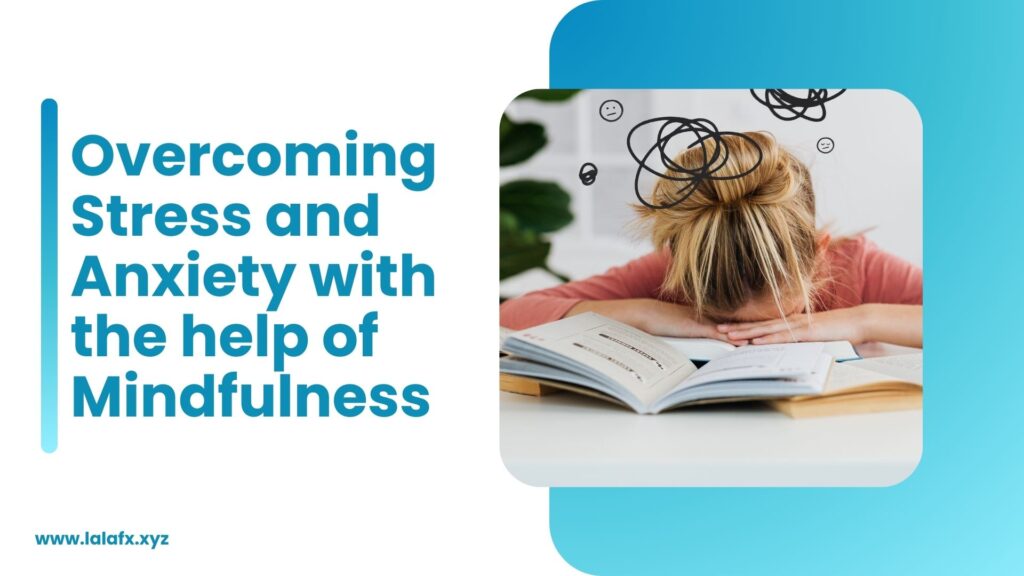
Mindfulness is an excellent instrument that assists you in reducing stress because it makes you more conscious of your thoughts and feelings without moralizing. In practicing mindfulness meditation, you get to know how to watch your thoughts and emotions come and go without being preoccupied with them. This enables you to act in stressful situations in a more clear and composed way. Stress hormones, decreased blood pressure, and calmness can also be achieved with regular practice of mindfulness. The advantages of mindfulness in stress management are not a secret.
Anxiety Dations using mindfulness
Anxiety is especially the problem that can be addressed with the mindfulness techniques. Exercises in deep breathing e.g. breathing deeply in your nose and breathing slowly out of your mouth can also be effective in soothing your nervous system, and also in making you feel less anxious. Contemplation meditation is also a possible tool since it offers a disciplined method of concentration of your mind and relaxation of thoughts. In mindfulness meditation practice and other mindfulness exercises, it is possible to learn to deal with the symptoms of anxiety and develop a feeling of inner peace. Mindfulness apps would enhance your meditation.
Real-Life Examples of Mindfulness in Action
A student experiences exam stress. The student uses a breathing exercise to calm their mind before beginning their study session. A professional who follows a hectic schedule practices mindfulness during his commute by observing his environment and feeling his feet touch the pedals instead of worrying about work. The practical examples show that developing mindfulness and practicing mindfulness throughout their day enables people to manage their stress and enhance their mental health. The exercises to help reduce stress will make a difference.
FAQ Section
What are the ABCs of Mindfulness?
There is no formal “ABCs of mindfulness,” but it can be helpful to think of mindfulness in terms of three key elements: Awareness, Being present, and Cultivating acceptance. Awareness involves paying attention to your thoughts, emotions, and sensations. Being present means focusing on the current moment without judgment. Cultivating acceptance means acknowledging your experiences as they are, without trying to change them. By integrating these elements into your mindfulness practice, you can enhance the benefits of mindfulness and promote overall well-being.
What are the Three Pillars of Mindfulness?
Three mindfulness pillars, which are frequently referred to, are intention, attention, and attitude. Intention is what is meant by your purpose or motivation of practising mindfulness. Attention is a process of being fully aware of the current situation without being judgmental. Attitude is an approach to the things that you are going through with curiosity, kindness, and acceptance. When you develop these three pillars in your practice, you are able to improve your mindfulness practice and have a sense of calm and clarity even more. The methods of mindfulness that support these pillars will enhance attention.
What is meditation?
Meditation is a discipline that entails training your mind to be in concentration and shift your thoughts. There are plenty of different types of meditation, yet most of them have some common aspects, including finding a serene environment, paying attention to your breathing, not judging yourself, but just observing what you are thinking and how you are feeling. The meditation may take place as formal sitting meditation or walking meditation or even mindful activities such as mindful eating. The aim of meditation is to develop a higher awareness that exists in the current moment and it fosters a feeling of serenity and well being within the self.
Why mindfulness matters?
There are a lot of advantages of mindfulness especially in enhancing mental and emotional well-being. Frequent mindfulness may result in:
- Better emotional regulation
- Enhanced self-awareness
- Increased ability to be empathetic
A good mindfulness practice will also help you to feel calmer both at practice and in life in general.